

Language for Difficult Conversations Up the Chain
At some point, many capable leaders reach a quiet crossroads.
They see what’s not working.
They feel the impact of decisions or lack of decisions.
They’re carrying responsibility without authority.
And they know a conversation is needed.
But knowing that and knowing how are two very different things.
This post is for leaders who want to speak clearly and professionally with a boss or influential person without venting, blaming, or shrinking themselves in the process.
First, a Reframe That Matters
Having a difficult conversation is not about:
- Correcting someone
- Proving a point
- Forcing change
It is about:
- Naming impact
- Claiming agency
- Preserving your integrity
You are not responsible for how the other person responds.
You are responsible for how clearly and cleanly you show up.
Start With the Right Frame (Not the Problem)
Many conversations fail before they begin because leaders start with frustration instead of intent.
Try opening with shared purpose, not critique.
Examples:
- “I want to have this conversation because I care about the team and our long-term effectiveness.”
- “I’m hoping we can talk about something that’s been impacting my role and how I show up.”
- “My goal here isn’t blame – it’s clarity.”
This signals maturity and steadiness, not threat.
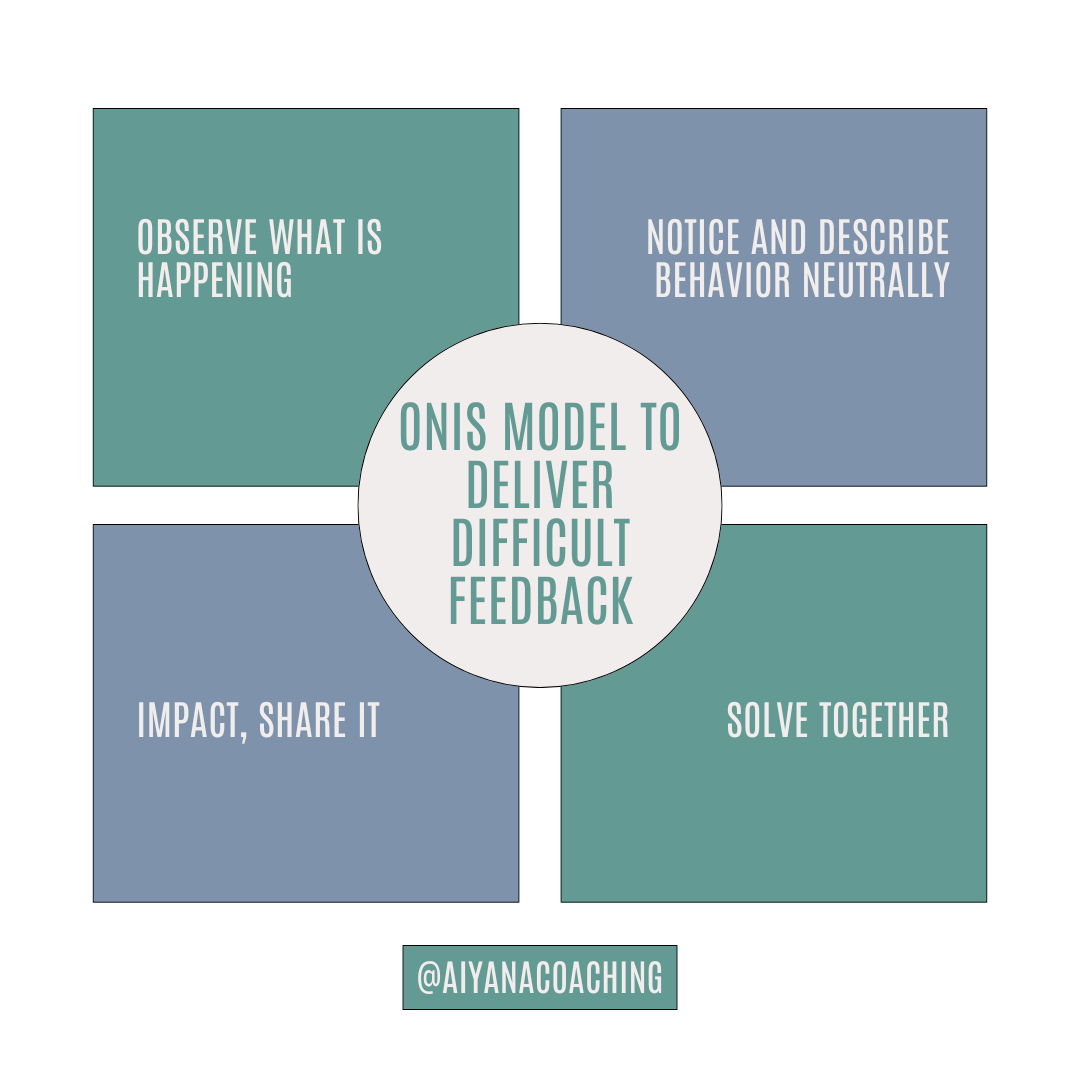
Name Impact, Not Character
One of the safest ways to speak up is to describe impact rather than intent.
Avoid:
- “You don’t communicate clearly.”
- “You’re not present.”
- “Leadership hasn’t been strong.”
Instead, try:
- “When priorities change without explanation, I notice confusion and hesitation on the team.”
- “When decisions get delayed, I end up absorbing a lot of tension from others.”
- “I’m finding it hard to do my best work without clearer direction.”
This keeps the conversation grounded and professional.
Use “I” Statements That Aren’t Apologies
“I” statements are often taught but many leaders soften them so much they disappear.
Avoid:
- “This might just be me…”
- “I could be wrong, but…”
- “I don’t want to be a problem…”
Try instead:
- “I want to be transparent about what I’m experiencing.”
- “I need more clarity in order to lead effectively.”
- “I’m at a point where I need to talk about what support looks like.”
Clarity is not aggression.
Make a Clean Ask (or Name the Absence of One)
You don’t always need a solution but you do need direction.
Examples:
- “What would you like me to prioritize when these tensions come up?”
- “How do you want me to handle this when it happens again?”
- “Is this something you want me to take on, or should it stay with you?”
If you don’t have an ask yet, say that too:
- “I’m not asking for an immediate fix. I wanted to name this and understand how you see it.”
That honesty builds credibility.
When the Other Person Is Defensive or Dismissive
This is where many leaders shut down or escalate.
If you meet resistance, return to your anchor:
- “I’m not asking you to agree. I wanted to be clear about my experience.”
- “I understand we may see this differently. This is how it’s landing on me.”
- “I wanted to bring this forward rather than let it turn into frustration.”
You’re modeling leadership, even if it’s not mirrored.
If the Conversation Changes Nothing
This matters, and it needs to be said plainly:
A conversation going poorly does not mean it was a mistake to speak.
Sometimes the clarity you gain is not change. It’s information.
Information that helps you decide:
- What to stop carrying
- How to set boundaries
- Whether to prepare for a different next step
Speaking is not a guarantee of improvement.
But silence almost always guarantees erosion.
Before You Speak: Three Questions to Ask Yourself
This is the part I’d strongly encourage you to include, because it protects your audience.
Before initiating the conversation, pause and ask:
- What is my real intention here?
(Relief, clarity, validation, change?) - What am I willing *and not willing* to carry going forward?
- What will I do if nothing changes?
(Not as a threat – just as self-honesty.)
These questions turn a risky conversation into a grounded one.


A Closing Word to the Leader Reading This
Speaking up doesn’t require certainty.
It requires self-respect.
You are allowed to name impact.
You are allowed to ask for clarity.
You are allowed to stop disappearing in the name of professionalism.
That, too, is leadership.